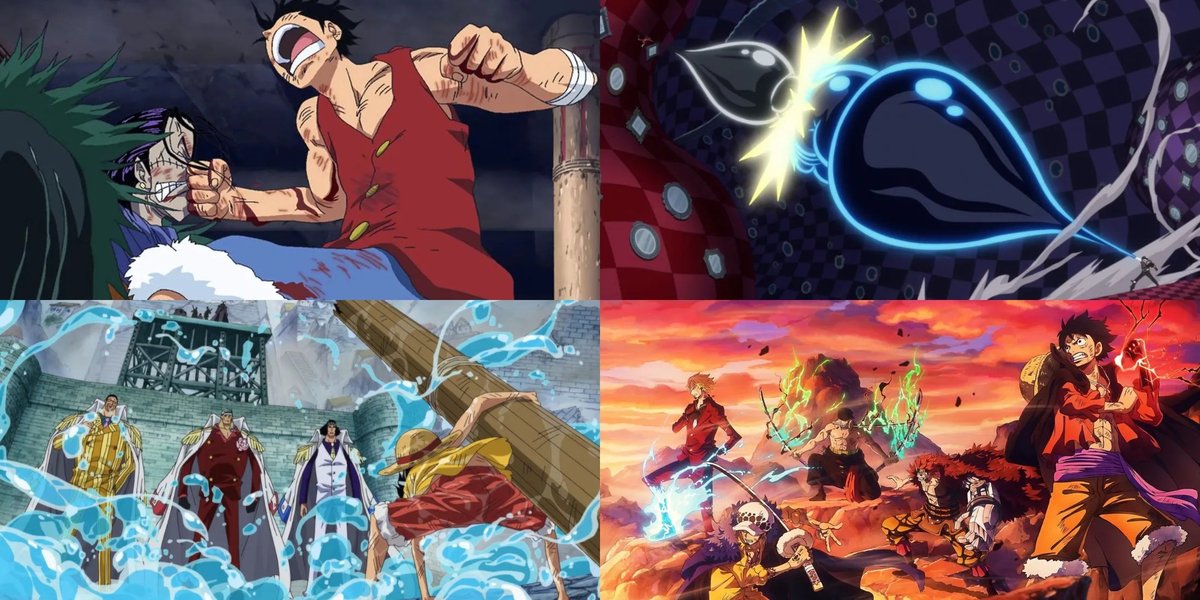
When you dive into the vibrant, often chaotic worlds of shonen manga and anime, you're not just watching characters fight; you're often engaging with meticulously constructed systems of power. Understanding the Foundations of Manga Power Systems isn't just for aspiring creators; it's key to appreciating the enduring appeal of series that have captivated millions. These intricate frameworks define everything from character growth and world-building to the very stakes of every epic showdown. They're the invisible architects behind the coolest techniques and the most nail-biting battles, guiding our heroes and villains through their journeys of strength and self-discovery.
At a Glance: What You'll Learn About Manga Power Systems
- The "Why": Discover how robust power systems elevate shonen narratives beyond simple fights.
- Core Components: Break down the essential elements that define any compelling power system.
- Archetype Examples: Explore diverse types of power systems with detailed examples from popular manga.
- Design Principles: Learn the unwritten rules and best practices for creating engaging and consistent power systems.
- Common Pitfalls: Understand what can go wrong and how to avoid inconsistencies that break immersion.
- Deeper Appreciation: Gain new insights into your favorite series by recognizing the engineering behind their epic battles.
More Than Just Flash: Why Power Systems Are Shonen's Secret Sauce
At its heart, shonen manga thrives on conflict and growth. Characters face impossible odds, overcome personal limitations, and strive to become stronger. But what exactly is "strength" in these worlds? It's rarely just about brute force. It's about mastery over a defined power system.
A well-crafted power system does far more than just facilitate cool fight scenes. It serves as a narrative backbone, offering a logical framework for character progression. Imagine a world where heroes simply got stronger because the plot demanded it; the stakes would crumble, and the sense of achievement would evaporate. Instead, power systems provide clear rules for improvement, create unique strategic possibilities in combat, and deepen the lore of the fictional universe itself. They give readers something tangible to grasp, speculate about, and root for.
The DNA of Power: Core Elements of Any Manga Power System
Before we delve into specific examples, let's dissect the fundamental building blocks present in virtually every compelling manga power system. Think of these as the elements you'd find in a blueprint, whether simple or grand.
1. The Source: Where Does the Power Come From?
Every ability needs an origin. Is it innate, like a mutation or a birthright? Is it learned through rigorous training or academic study? Perhaps it's granted by an external force, a contract, or even technology. The source often dictates the initial availability and accessibility of the power.
- Innate: Born with it (e.g., Mob's psychokinesis, a ghoul's kagune).
- Learned/Cultivated: Mastered through practice or specific methods (e.g., Tao in Hell's Paradise, spirit energy control in Yu Yu Hakusho).
- External/Contractual: Acquired through a deal, item, or parasitic relationship (e.g., Devils in Chainsaw Man, Triggers in World Trigger).
2. Mechanism & Rules: How Does It Work (and Not Work)?
This is the "how-to" manual of your power system. What are the specific actions required to activate an ability? Are there gestures, incantations, or mental commands? Crucially, what are its limitations and conditions? A power system without clear rules often feels arbitrary and loses reader trust. Defined mechanisms allow for creative problem-solving and strategic combat.
3. Scalability: How Does Power Grow?
A stagnant power system leads to stagnant characters. How do users increase their strength, versatility, or control? Is it through training, acquiring new techniques, evolving their existing powers, or finding better gear? The path to improvement provides a tangible goal for characters and keeps readers invested in their journey.
4. Application: What Can It Do?
Beyond simply existing, what are the practical uses of the power? Does it manifest as offensive attacks, defensive shields, healing capabilities, or utility skills like enhanced senses or environmental manipulation? The range of applications directly impacts how characters interact with their world and each other.
5. Cost & Consequence: What's the Price?
True power rarely comes free. There should be a drawback or consequence for using an ability, especially powerful ones. This could be physical exhaustion, mental strain, a finite resource, a time limit, or even moral compromise. Costs add tension, force strategic decisions, and prevent characters from simply spamming their strongest attacks.
6. Uniqueness & Differentiation: Who Has What?
While some powers might be universally accessible, a great system often differentiates its users. What makes one character's manifestation of power distinct from another's? This could be personal interpretation, a unique mutation, or specialized training, leading to diverse fighting styles and personalities.
A Spectrum of Might: Deconstructing Common Power System Archetypes
Manga power systems come in a dazzling array of forms, but many can be grouped into archetypes based on their fundamental nature. Let's explore these, using the examples you provided to bring them to life.
1. Biological/Intrinsic Systems: Power from Within
These systems tie power directly to a character's physiology, species, or innate physical traits. The abilities are often an extension of their body, making them feel organic and deeply personal.
- Tokyo Ghoul's "Kagune" & "Quinques": This system is elegantly simple and biologically cohesive. Ghouls manifest a "kagune," a predatory organ that serves as their weapon, varying in type and form. The human counter-force, the CCG, creates "quinques" by processing fallen ghoul kagune, turning the enemy's strength against them. The clarity of its biological basis makes Tokyo Ghoul's power system easy to understand and visceral in its portrayal.
- Kaiju No.8's "Fortitude Levels" & Kaiju Weapons: Here, power is quantified through "Fortitude levels" for Kaiju, from weak Yoju to powerful Identified Kaiju. Humans then harness the biological components of defeated Kaiju to forge specialized weapons, their strength directly correlating with the Kaiju's original Fortitude. It's a clear, hierarchical system where the inherent power of the enemy directly translates into the hero's tools.
In these systems, progression often involves understanding one's own body, adapting to mutations, or upgrading equipment derived from specific biological sources.
2. Energy Manipulation Systems: The Flow of Life (or Death)
Perhaps the most common archetype, these systems involve characters manipulating an ambient or internal energy source. This energy can be spiritual, elemental, or even abstract, and its mastery often dictates one's strength.
- Yu Yu Hakusho's "Aura" / "Energy": Universal to all beings, "aura" (or "spirit energy" for humans, "demon energy" for demons) is a versatile force. It enhances physical attributes, forms energy constructs or weapons, and can even heal. Crucially, emotions directly influence its potency, adding a psychological layer to combat. Mastering aura involves control, concentration, and emotional stability, making battles intensely personal and often a test of will.
- Toriko's "Gourmet Energy" / "Appetite Energy": In a world obsessed with food, the fundamental energy is "gourmet" or "appetite energy." Gourmet hunters channel this life force to fire concentrated beams, create edible weapons, or enhance specific body parts to superhuman levels. It's a colorful and highly specific energy system that ties directly into the series' core theme of culinary pursuit.
- Hell’s Paradise’s "Tao": This system is deeply philosophical, centering on "Tao," the life force energy in all organisms. Mastery involves understanding the Yin-Yang concept and achieving balance through the "Middle Way." Manipulating Tao allows users to enhance abilities, regenerate, and affect others, making internal spiritual balance directly linked to external power. It adds a profound layer of introspection and martial philosophy to the action.
These systems excel at showing growth through training montages, moral dilemmas (e.g., using forbidden energy), and the deep connection between a character's inner state and their outer strength.
3. Ability/Skill-Based Systems: The Power of Uniqueness
Instead of a generic energy, these systems focus on highly distinct, often individual, special abilities. While there might be an underlying "magic" or "psychic" energy, the emphasis is on the unique manifestations and their specific applications and limitations.
- Mob Psycho 100's "Psychokinesis": Here, "psychokinesis" is the primary power, allowing espers to move objects with their minds, perceive spirits, and generate force fields. The strength of an esper's psychokinesis is determined by their innate "esper level," with Mob being an exceptionally powerful, yet emotionally repressed, individual. The system highlights the psychological burden of immense power and the struggle for control.
- Bungo Stray Dogs' "Abilities": This is a highly creative and complex system where each character's "ability" is based on a real-life literary work, named after its author. Each power has unique, often convoluted, mechanisms known primarily by its user. This allows for incredibly diverse and intelligent battles, where understanding and outmaneuvering an opponent's specific ability is paramount. The system rewards creative application and strategic thinking.
- Seven Deadly Sins' "Magical Power": Characters in this world possess "magical power" that fuels unique abilities across various races. These abilities are broadly categorized into nine types (e.g., destruction, search, enchantment), with individual strength varying greatly. The focus is on how each character's unique power interacts with others, leading to diverse team compositions and combat strategies.
In ability-based systems, creativity in power application and strategic understanding of an opponent's specific skills often overshadow raw power.
4. Technological/Tool-Based Systems: Power Through Innovation
Sometimes, the power isn't innate or spiritual, but comes from advanced technology or specialized tools. These systems often feature a distinct energy source that powers the tech, but the focus is on the gadgets themselves.
- World Trigger's "Triggers" & "Trions": Humans in World Trigger use "triggers," advanced weapons powered by "Trions," their innate energy source. Individuals with high Trion values can wield triggers' full power and even create enhanced "Trion bodies," significantly boosting their combat prowess. The system introduces elements of tactical squad combat, resource management (Trion depletion), and the importance of specific weapon types and combinations. It feels grounded in science fiction, even when fantastical.
These systems excel at showcasing diverse gear, tactical planning, and the potential for technological advancement within the narrative.
5. Contractual/External Systems: Borrowed Might
In these systems, power is often granted through a pact, a parasitic relationship, or by channeling an external entity. There's usually a clear exchange or cost associated with this borrowed strength.
- Chainsaw Man's "Devils": Devils are born from human fears, their strength directly proportional to the collective fear they inspire. Humans can form contracts with devils, gaining specific abilities in exchange for a cost (e.g., body parts, lifespan). Alternatively, devils can possess dead human bodies, empowering them. This system is brutal, chaotic, and deeply psychological, exploring themes of fear, sacrifice, and the blurred lines between humanity and monstrosity.
Contractual systems often introduce moral dilemmas, unexpected consequences, and the constant threat of a power turning against its user.
Crafting Cohesion: Principles for Designing Enduring Power Systems
Whether you're writing your own story or simply appreciating the genius behind your favorite manga, understanding the principles of good power system design elevates the experience.
1. Clarity Over Complexity (But Allow for Depth)
A good power system should be understandable at a basic level, even if it has layers of intricate depth. Readers need to grasp the core concept quickly. The "Kagune" of Tokyo Ghoul is simple: a ghoul's body weapon. Its nuances and variations can be explored later. Overly complex rules introduced too early can alienate readers.
2. Internal Logic & Consistency
This is paramount. The rules of your power system, once established, must remain consistent. If a character can fly by expending energy, they shouldn't suddenly be able to fly indefinitely without consequence. Inconsistencies break reader immersion and trust. The system doesn't have to be "realistic," but it must be "internally logical" within its own established framework.
3. Room for Growth & Evolution
Great systems aren't static. They allow for characters to grow stronger, discover new applications, or even evolve their powers. Think about the progression of "Aura" control in Yu Yu Hakusho, or the ever-increasing variety of "Triggers" in World Trigger. This keeps the stakes rising and ensures characters don't hit a power ceiling too early.
4. Meaningful Limitations & Costs
Power without consequence is boring. Limitations, whether they be finite resources (Trion values in World Trigger), physical strain (Mob's emotional limits), or contractual costs (Chainsaw Man), create tension and force strategic thinking. They make victories feel earned and defeats more impactful.
5. Fostering Strategic Combat
The best power systems encourage intelligent use, not just bigger blasts. When abilities have clear rules and limitations, characters must think creatively to combine powers, exploit weaknesses, or counter opponents. Bungo Stray Dogs shines here, where understanding an opponent's unique ability is often the key to victory, leading to battles that are as much psychological as physical. If you're looking to brainstorm your own unique abilities and limitations, you might find inspiration with the manga power system generator. It can help spark ideas for how different power sources, mechanisms, and costs might combine to create something truly distinctive.
6. Reflecting World & Theme
A truly brilliant power system is woven into the very fabric of its world and reinforces the story's core themes. Chainsaw Man's devil contracts and fear-based power system directly mirrors its dark, often nihilistic exploration of human desires and anxieties. Hell's Paradise's "Tao" system perfectly encapsulates its themes of life, death, balance, and enlightenment. The power system isn't just a combat mechanic; it's a storytelling device.
Common Traps: What Can Break a Power System
Even the most promising power systems can stumble if creators aren't careful. Here are some pitfalls to watch out for:
- Power Creep Without Consequence: When characters continuously get stronger without any logical explanation, training, or significant cost, it devalues their achievements and makes future threats feel arbitrary.
- Inconsistent Rules: Suddenly introducing new rules or ignoring old ones to solve a plot problem is a sure way to lose reader trust. If a character couldn't do something last arc, there needs to be a clear, in-world reason they can do it now.
- Overly Generic Abilities: If every character's power essentially boils down to "shoots energy blasts" or "is super strong," the system lacks individuality and strategic depth.
- Lack of Clear Stakes: If using a powerful ability has no personal risk or cost, battles lose their intensity. Why not just unleash the ultimate attack all the time?
- Ignoring the "Why": A system that exists purely for flashy fights, disconnected from the characters' growth, the world's lore, or the story's themes, feels hollow.
Beyond the Fights: How Power Systems Deepen Character & Story
Power systems do more than just facilitate battles; they are crucial engines for character development and thematic exploration:
- Moral Dilemmas: The costs and consequences of power can force characters to make difficult choices, revealing their true nature. Is power worth the sacrifice?
- Identity: A character's relationship with their power often defines who they are. Do they embrace it, reject it, or struggle to control it? (Think Mob's internal struggle with his psychokinesis).
- Sacrifice & Resolve: When using a powerful ability comes at a great personal cost, it highlights a character's determination and willingness to protect what they value.
- Training Montages & Mentorship: The process of learning and mastering a power provides excellent opportunities for character bonding, rivalry, and showing dedication.
Your Turn: Appreciating the Engineering Behind the Epic
The next time you settle in for a new chapter or episode of your favorite shonen, try looking beyond the explosions and epic clashes. Pause and consider the intricate architecture of its power system. Ask yourself:
- What is the source of this power?
- What are its fundamental rules and limitations?
- How do characters get stronger within this framework?
- What are the costs associated with using this power?
- How does the power system connect to the story's themes or the characters' personal journeys?
By dissecting the Foundations of Manga Power Systems, you're not just consuming entertainment; you're engaging with sophisticated world-building and narrative design. This deeper understanding will undoubtedly enrich your appreciation for the creative genius behind shonen's enduring appeal, transforming casual viewing into a more insightful and rewarding experience.